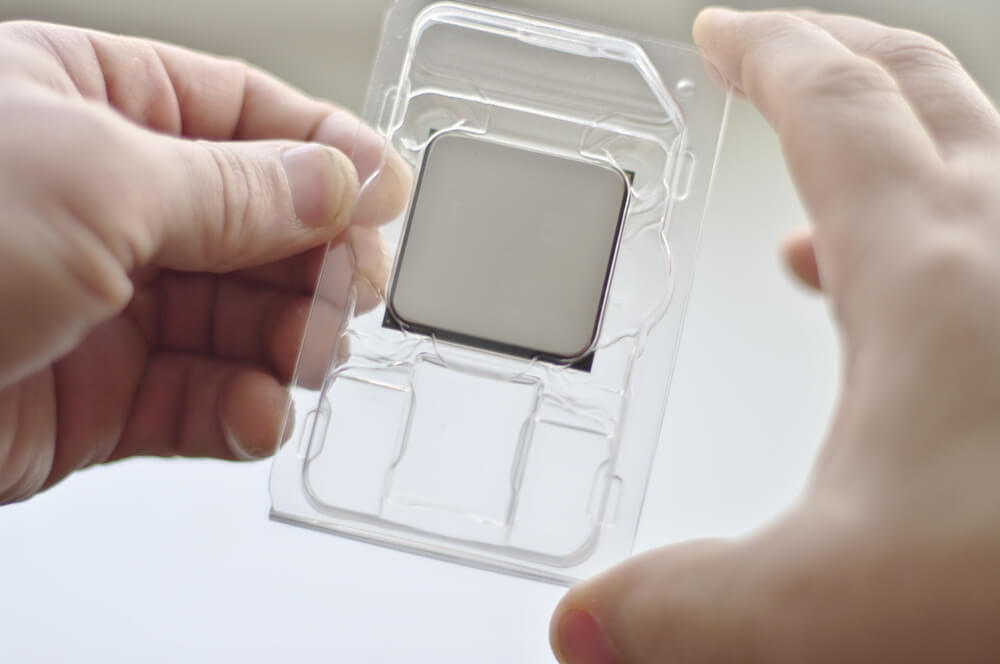
What Is Sustainable Thermoforming?
Sustainable thermoforming is the manufacturing of custom packaging using closed-loop materials like rPET, PIR (Post-Industrial Recycled) plastics, or bio-based resins. It focuses on “design for circularity,” ensuring that packaging, such as blister packs and inserts, is 100% recyclable or compostable while maintaining the rapid speed-to-market required by modern retail.
Why Is Sustainable Thermoforming Packaging a Legal Requirement in 2026?
In 2026, seven US states have active Extended Producer Responsibility (EPR) laws that can restrict non-compliant brands from selling packaged products. The FTC also prohibits calling packaging ‘recyclable’ without qualification unless recycling facilities serve at least 60% of consumers. Sustainability is no longer a marketing choice; it is a legal and commercial requirement. |
Sustainability deadlines for CPG packaging are no longer theoretical. Regulations are tightening, retailers are scoring suppliers on sustainability, and consumers are making it personal. According to Shorr Packaging’s 2025 survey of over 2,000 US consumers, 54% had deliberately chosen a product for its sustainable packaging in the prior six months, and 39% had already switched brands because a competitor offered better. This shift is especially challenging for premium beauty and cosmetics brands, where there is immense pressure to transition to eco-friendly options without sacrificing a high-end look and feel. Complete Packaging Solutions has a proven track record of navigating these complexities for household names like Procter & Gamble, L’Oréal, General Mills, Hasbro, and Green Garden.
The four forces reshaping packaging procurement right now:
- EPR laws with real teeth: Colorado and Oregon already restrict sales for non-compliant producers. California, Minnesota, and Maryland are in registration and reporting phases, with increasing enforcement through 2027–2032 (Mayer Brown; H2 Compliance).
- FTC Green Guides compliance: An unqualified ‘recyclable’ label is a legal claim, not just marketing language. Recycling facilities must serve at least 60% of your consumers (FTC, 16 CFR §260.12).
- Retailer requirements: Major US and EU retailers are building sustainability criteria into supplier agreements and line reviews. This is no longer a voluntary differentiator; it’s a qualification bar.
- Consumer switching behavior: 39% of US consumers have switched to a competitor because of better sustainable packaging. 90% say they are more likely to buy from brands with eco-friendly packaging (Shorr Packaging, 2025).

Which Thermoforming Material Is Best for Sustainable CPG Packaging: rPET, Bio-Based Plastic, or Paperboard?
The best material depends on your product. rPET (recycled plastic) is the most compliance-ready option. It is recyclable in 60%+ of US communities and eligible for EPR fee reductions. Bio-based plastics suit brands with composting goals. Coated paperboard is best for plastic-free formats with dry-goods applications. |
There are three main material options for CPG and retail thermoforming right now. The right choice depends on your product, your retail environment, and what recycling or composting infrastructure your customers can actually access.
When evaluating these materials, it is important to distinguish between two types of recycled content. Post-Consumer Recycled (PCR) comes from curbside recycling and is heavily rewarded by regulators with lower EPR fees. Post-Industrial Recycled (PIR) refers to clean factory scrap like trim and off-cuts which improve material yield and counts toward FTC recycled claims. However, it does not offer the same EPR discounts
What Is rPET, and Why Is It the Most Widely Used Sustainable Thermoforming Material?
rPET (recycled PET) is conventional PET plastic that has been collected, cleaned, and reprocessed into new packaging. It holds a 63% share of the recycled-content thermoforming market because it is recyclable through existing curbside programs in over 60% of US communities and qualifies for unqualified ‘recyclable’ labeling under FTC Green Guides. |
rPET works best for:
- Food and beverage trays, clamshells, and lidding; strong moisture barrier, food-safe, optically clear
- Retail blister and display packaging where product visibility is essential
- Brands needing documented recycled content for EPR compliance reporting and fee modulation
- US domestic supply chains, where rPET sourcing and traceability are well-established
When Should a CPG Brand Choose Bio-Based Plastic Over rPET?
Choose bio-based plastics when your brand has composting end-of-life goals or explicit fossil-fuel reduction commitments, and your target markets have accessible industrial composting infrastructure. They’re not a better version of rPET; they’re a different tool for a different sustainability story. |
Bio-based plastics are made from plant-derived materials: corn starch, sugarcane, and wood fiber rather than petroleum. The main types are PLA (polylactic acid), PHA (polyhydroxyalkanoates), and wood-composite materials.
The practical appeal of PLA is that it runs on the same thermoforming equipment used for conventional PET and PP plastics. This means there is no need to buy new machinery. At the European Thermoforming Conference 2026, this was a recurring theme: bio-based materials drew strong interest because manufacturers can adopt them without major capital outlay (Sulapac / Joona Kontinen).
The important caveat is end-of-life. Compostable packaging doesn’t break down in a curbside bin or home compost heap; it needs an industrial composting facility running at high temperatures. Those facilities are growing,, but they’re not universally accessible. If your packaging ends up in a regular recycling bin or landfill, the environmental benefit is significantly reduced. Map your target markets’ composting infrastructure before committing to bio-based substrates.
Bio-based plastics work best for:
- Beauty and personal care brands positioned around premium sustainability, especially where composting end-of-life is accessible
- Food service and fresh food packaging in cities or regions with industrial composting programs
- Brands with public commitments to eliminating fossil-fuel-derived content
- Custom inserts where the sustainability story is part of the brand value proposition
Is Coated Paperboard a Viable Thermoforming Material for CPG Packaging?
Yes. Coated paperboard is a credible thermoforming substrate for dry consumer goods, cosmetics, supplements, and electronics accessories. It is recyclable through the standard paper/cardboard stream available to most US households and aligns well with paper-stream EPR programs. The main limitation is moisture sensitivity; high-moisture food formats may need a separable plastic liner. While we do not manufacture corrugated packages, cartons, or shippers, we specialize in designing custom sustainable thermoform inserts that go inside these outer packages. |
Coated paperboard works best for:
- Dry consumer goods, supplements, electronics accessories, and cosmetics where moisture isn’t a concern
- Brands with explicit plastic-elimination targets or retailer plastic-reduction requirements
- Packaging where a premium, natural look and feel matters: gifting, unboxing, or DTC formats
- Markets where paper recycling infrastructure is well-established, and consumer participation is high
Side-by-Side Comparison: rPET vs. Bio-Based vs. Coated Paperboard
Factor | rPET | Bio-based plastics | Coated paperboard |
Recyclability | Recyclable in 60%+ of US communities when properly designed | Requires industrial composting — a specialist facility, not a curbside bin. Growing but not universal | Recyclable through the standard paper/cardboard bin in most US communities |
Carbon footprint | Up to 70% lower than virgin PET at 100% recycled content; savings scale with PCR % | Lower fossil-fuel reliance; actual carbon savings vary by resin type and local energy grid | Generally lower-carbon to produce than virgin plastic; depends on coating type |
Barrier performance | Excellent clarity; strong moisture barrier; safe for direct food contact | Good for PLA; PHAs are still developing barrier properties | Moderate moisture barrier — fine for dry goods; specialist coatings expand food-use options |
Durability | Matches virgin PET in strength; suitable for retail and food formats | PLA handles most standard applications; bio-resins can struggle with high-stress use | Structurally rigid and strong, but less suited to prolonged moisture exposure |
Production fit | Runs on existing thermoforming lines with no major changes | PLA runs on PET/PP equipment; other bio-resins may need process adjustments | Needs specialist tooling and scoring; works on most converting lines once set up |
Cost | Small premium over virgin PET; gap narrows significantly at commercial volumes | Higher raw material cost; consumer willingness to pay a sustainability premium is growing | Cost-competitive at volume; upfront tooling investment required |
EPR / regulatory fit | Strong: qualifies for recycled-content mandates and lower eco-modulated EPR fees | Better suited to composting targets; less advantaged under recycling-focused mandates | Strong: paper is widely accepted as recyclable; aligns well with paper-stream EPR programs |
How Do You Design Thermoformed Packaging So It Actually Gets Recycled?
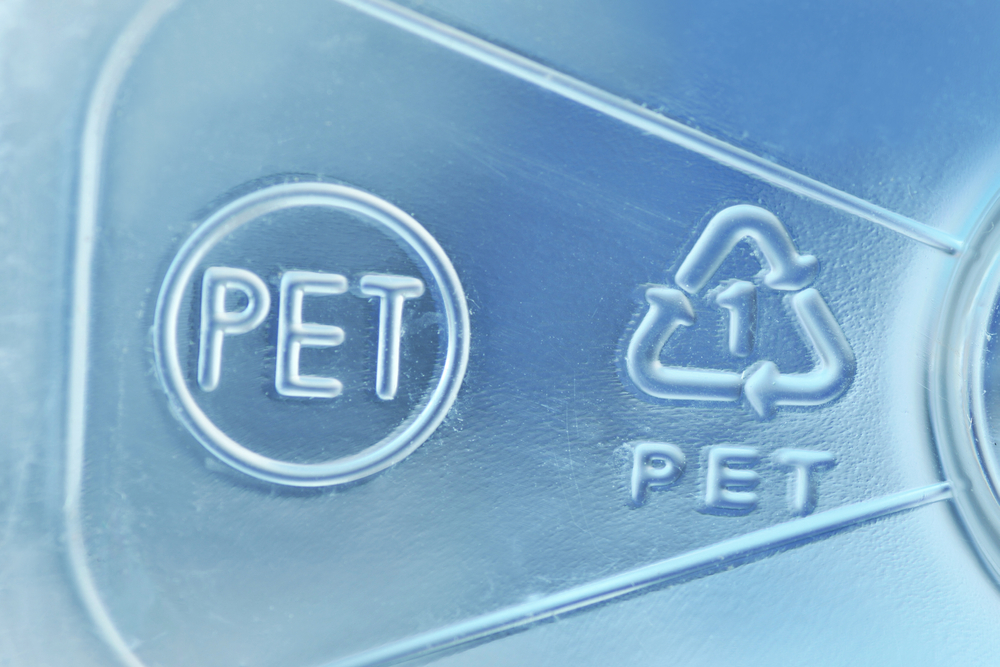
Design packaging from a single material type (mono-material construction), use only APR-compatible labels and closures, and apply accurate How2Recycle end-of-life labels that reflect real-world recyclability in your markets. These design choices directly determine whether your packaging passes or fails at the recycling sorting facility, regardless of what the substrate is. |
Choosing the right material is only part of the picture. A package made from rPET that has an incompatible adhesive label, a closure made from a different plastic, and no recycling instructions is much harder to recycle in practice than a well-designed package from the same material. Material gets you to the starting line, and design gets you across it.
The concept that matters most is mono-material construction: making a package entirely from a single material. A recycling facility is essentially a sorting operation, and the simpler the material stream, the more likely the package is to be recovered and processed. Treat recyclability as an engineering requirement from the first sketch, not a compliance checkbox at the end of development.
Six design decisions that determine whether packaging actually gets recycled:
- Mono-material construction: Use a single resin throughout the body, lid, and integrated fitments. Single-resin packages are easiest to recover and attract the lowest EPR fees (Mayer Brown; Trayak).
- Label compatibility: Use labels from a resin family compatible with the package material, or switch to direct printing. Incompatible adhesives are one of the most common reasons recyclable packages are rejected at sorting facilities (APR Design Guide).
- Closure and fitment design: Hinges, snap-fits, and lids made of the same resin as the body do not require separation. Where dissimilar materials are unavoidable, make separation easy and obvious for the consumer.
- Lightweighting: Reducing material gauge through structural optimization lowers both cost and carbon footprint without sacrificing structural performance.
- End-of-life labeling: A How2Recycle label must reflect actual recyclability in your specific markets, not theoretical recyclability. This is an FTC compliance requirement, not just a consumer trust issue (FTC Green Guides, 16 CFR §260.12).
- Scrap loop closure: Plastic trim and off-cuts generated during manufacturing should be collected, reground, and returned to sheet suppliers for reprocessing. This closes the loop before the package reaches a consumer.
This closed-loop scrap management is where PIR (post-industrial recycled) content originates. When your thermoforming line captures trim and off-cuts and returns them to sheet suppliers or in-house regrind, you are turning what would otherwise be waste into PIR feedstock. In practice, this improves overall material yield and reduces disposal costs without requiring external sourcing. However, these are operational benefits rather than credentials that count toward consumer-facing recycled content claims. The FTC’s Green Guides do not require brands to break out PIR separately from PCR in a recycled content claim, but if a brand chooses to make that distinction, it must have substantiation for the percentage of each (16 CFR §260.13). PIR does not substitute for externally sourced PCR for eco-modulated EPR fee reductions that reward post-consumer recyclability over manufacturing-side efficiency gains (Mayer Brown; Trayak).
Does Switching to Sustainable Thermoforming Materials Slow Down Development Timelines?
No, sustainable thermoforming does not inherently take longer than conventional thermoforming. What drives extended timelines is fragmentation across multiple vendors, not the material itself. A single-facility workflow typically compresses a six-week multi-supplier prototype cycle to two to three weeks, regardless of whether the material is rPET, bio-based, or paperboard. |
The objection we hear most often from brands considering a transition to sustainable packaging is: ‘We can’t afford the lead time.’ The development calendar is often unforgiving, and the assumption is that new materials add months.
It’s a reasonable concern, but it’s mostly a function of how the development process is organized, not what the material is. Our clients win because we offer Rapid Turnaround and Customization. By leveraging our U.S- Based, transparent Sustainability and domestic manufacturing, a single facility workflow typically compresses a six-week multi-supplier prototype cycle to just two to three weeks, regardless of whether the material is rPET, bio-based, or paperboard.
What Actually Determines Lead Time in a Sustainable Thermoforming Project?
- Tooling fabrication: Aluminum tooling for standard geometries takes one to three weeks. Complex shapes take longer regardless of material. A design-for-manufacturability review before tooling is cut catches geometry problems when they’re a one-hour conversation, not a two-week delay.
- Material qualification: rPET on a line that already runs PET needs minimal qualification. A bio-based resin or coated paperboard substrate that’s new to a facility needs a short qualification run (typically one to three days) to dial in temperature profiles and forming pressures.
- Compliance documentation: Certificates of Compliance for recycled content, APR design checks, and How2Recycle label assignments add time only if treated as end-of-project tasks. Building them into the design and tooling phase means they’re ready when production is.
- Sampling and iteration: A single iteration cycle across multiple vendors can take weeks. In a single-facility workflow, the same cycle takes days. This compounds across the three to five iterations a typical project requires.
The bottom line is that brands that treat sustainable packaging as a last-minute compliance exercise face genuine timeline pressure. Brands that integrate material and design decisions into their standard NPD process, and partner with a facility that handles tooling and production in one place, find that sustainable packaging adds no meaningful time to their launch calendar.
Sustainability Spec Table: Key Metrics Across Thermoforming Material Options
Material | Recyclability | Durability Level | Common Application | Lead Time |
rPET (recycled) | 100% (widely accepted) | High | Retail Blisters/Trays | Rapid (2-4 weeks) |
Bio-Based Resins | Industrial Compostable | Medium | Short-shelf-life CPG | Standard (4-6 weeks) |
PIR (Post-Industrial) | High | High | Large-Volume Retail Trays | Rapid (2-4 weeks) |
Coated Paperboard | 100% (Fiber Stream) | Low-Medium | Secondary Medical | Rapid (3-4 weeks) |

Does Sustainable Thermoforming Cost More Than Conventional Packaging?
The unit material cost of rPET or coated paperboard is often slightly higher than virgin plastic. However, the total cost of ownership frequently closes or eliminates that gap when EPR fee savings, retailer compliance value, lightweighting reductions, and contracted supply pricing are factored in (Mayer Brown; Precedence Research). |
Here’s the cost conversation most brands are having: ‘rPET costs more per unit than virgin PET, so sustainable packaging costs more.’ That’s technically true on the material line of a spreadsheet, but it’s the wrong comparison.
The relevant question is what it costs your business not to transition. When the full picture is included, the economics look quite different.
Why Is the True Cost of Sustainable Packaging Lower Than It Appears?
Five factors shift the economics: EPR eco-modulation fees reward more recyclable packaging; retailer delistment risk has a real cost not visible in material price comparisons; lightweighting reduces material spend and shipping weight; rPET pricing at contracted volumes is typically 5–15% above virgin PET, not the 30–40% implied by spot price comparisons; and a meaningful share of consumers will pay a modest premium for sustainable packaging. |
- EPR fees favor sustainable materials: In Colorado and Oregon, brands pay lower EPR fees for packaging with higher recycled content or better recyclability. The fee difference between a virgin PET clamshell and a 30–50% rPET clamshell is not trivial at the shipping scale (Mayer Brown; Trayak).
- The cost of being delisted: Retailers that require sustainability compliance as a supplier condition impose a real cost on non-compliant brands through delistment risk, requalification costs, and lost shelf placement. None of that shows up in a material cost comparison, but it’s real.
- Lightweighting saves money: Designing with less material through structural optimization lowers both material spend and shipping weight. These savings partially or fully offset the cost premium of recycled or bio-based feedstock.
- Scale compresses the rPET premium: The spot-price premium for rPET over virgin PET is not the right benchmark for a brand committing to a material at commercial volumes. Contracted domestic supply partnerships typically set the premium at 5–15%, not the 30–40% implied by spot comparisons (Precedence Research).
- Consumer willingness to pay: A meaningful share of consumers say they’ll pay more for sustainably packaged products (Shorr Packaging, 2025). This doesn’t mean brands should raise prices, but it does mean the revenue impact of a transition is rarely as negative as feared.
The honest summary: Sustainable packaging often costs a little more on the material line. It frequently costs less overall once EPR fees, retailer requirements, lightweighting savings, and contracted supply pricing are factored in. And with seven states now enforcing or building toward EPR compliance requirements, the cost of not transitioning has a hard number attached.
What Is a Turnkey Sustainable Thermoforming Partnership, and Why Does It Matter?
A turnkey thermoforming partnership manages design, tooling fabrication, forming, compliance documentation, and retail-ready kitting in a single facility. This eliminates vendor handoff delays and specification drift, which are the primary causes of timeline and quality risks in sustainable packaging transitions. |
Most of the challenges that make sustainable packaging transitions feel complicated stem from fragmentation. Ours are built around the principle that keeping everything under one roof is the most direct way to solve them.
Here’s what a typical fragmented workflow looks like: a brand works with a design agency, sends the brief to a toolmaker, has the thermoforming run at another facility, contracts with a label supplier, and then sends everything to a kitting operation. Every handoff is a point where lead time stretches, specifications drift, and compliance documentation gaps appear.
A turnkey model eliminates those handoffs. A design engineer who knows the tooling constraints catches geometry problems in the concept phase. A compliance team embedded in the production workflow ensures COC documentation is ready when the line is.
For Direct-to-Consumer (DTC) and e-commerce brands, we go beyond basic assembly. We package your products, assemble kits, and drop ship directly to your customers. Our custom thermoformed inserts don’t just protect your product; they help right-size your packaging to reduce shipping costs and create a memorable, premium unboxing experience that sets your brand apart.
What Should a Turnkey Sustainable Thermoforming Partner Be Able to Deliver?
A capable turnkey partner should handle material sourcing and compliance documentation (including COCs for recycled content and How2Recycle label assignments), APR-compatible circular design from the concept stage, closed-loop scrap management, domestic US manufacturing with documented feedstock traceability, and retail-ready kitting in the same facility as the thermoforming run. |
- Single point of accountability: Material sourcing, tooling, forming, trimming, assembly, and kitting — one facility, one team. Specification changes happen once.
- Recyclability engineered from day one: Mono-material design, APR-compatible label selection, and closure design are established at the design stage and not as a retrofit after tooling has been cut.
- Compliance documentation built in: Certificates of Compliance for recycled content, How2Recycle assignments, and EPR reporting data generated as part of the production workflow, not scrambled together at project end.
- Closed material loop: Production scrap is ground and returned to domestic sheet suppliers for reprocessing, reducing virgin resin demand and supporting traceability claims.
- US manufacturing traceability: Domestic production shortens supply chains, reduces transport emissions, and makes it far easier to substantiate recycled content claims to the level required by FTC Green Guides and EPR reporting (FTC; Mayer Brown).
- Kitting integrated with production: Retail-ready assembly completed in the same building as the thermoforming run. Less handling, less secondary packaging waste, simpler supply chain.
Your Packaging Line Has a Sustainability Story; Let’s Make Sure It’s the Right One
Brands that have integrated sustainable materials, circular design, and EPR compliance into their packaging process are reducing regulatory liability, strengthening retailer relationships, and capturing the 39% of consumers who switch brands for better packaging (Shorr Packaging, 2025). Brands still treating sustainability as a future consideration are facing reactive costs and timeline pressure that make the transition harder than it needs to be. |
The regulations are here. The retailer requirements are in supplier contracts. The consumer data is clear. And the trade-offs that made sustainable thermoforming feel complicated are largely manageable with the right materials and the right partner.
What separates brands that handle this well from those that don’t isn’t budget. It’s about whether sustainability has been built into the packaging development process from the beginning, or retrofitted under deadline pressure. The good news is that wherever your packaging line sits today, a clear-eyed assessment is a straightforward place to start.
As a veteran-owned and operated business defined by our core values of customer service and quality, Complete Packaging Solutions brings decades of experience to the table. Our turnkey approach ensures you receive exceptional customer service and quality without the headache of managing multiple vendors
Frequently Asked Questions: Sustainable Thermoforming for CPG & Retail
Thermoforming is the process of heating a plastic or paperboard sheet until pliable, then shaping it over a mould using vacuum or pressure. It produces clamshells, blister packs, trays, and retail-ready packaging. Sustainable thermoforming uses recycled or bio-based materials to achieve the same formats with a lower environmental footprint.
rPET (recycled PET) is the most widely recyclable option — it’s accepted in over 60% of US communities via curbside programs and qualifies for an unqualified ‘recyclable’ label under FTC Green Guides. Coated paperboard is also highly recyclable through the standard paper/cardboard stream available to most US households.
Extended Producer Responsibility (EPR) laws require brands that sell packaged products to fund the end-of-life management of that packaging. Seven US states have enacted EPR packaging laws. Colorado and Oregon are already enforcing sales restrictions on non-compliant producers. California, Minnesota, and Maryland are in earlier implementation phases, ramping through 2032.
Under the FTC’s Green Guides (16 CFR §260.12), a brand can use an unqualified ‘recyclable’ claim only if recycling facilities for that specific packaging are accessible to at least 60% of consumers in the markets where the product is sold. Materials or designs that don’t meet this threshold require a qualified claim or disclosure.
No. Sustainable thermoforming doesn’t inherently take longer than conventional thermoforming. What extends timelines is fragmentation across multiple vendors, not the material. A vertically integrated facility handling design, tooling, and production together typically reduces a six-week multi-vendor prototype cycle to two to three weeks.
The unit material cost is often slightly higher, but the total cost of ownership frequently closes or eliminates that gap. EPR eco-modulation fees reward more recyclable packaging. Lightweighting reduces material and shipping costs. And contracted rPET supply typically costs only 5–15% more than virgin PET, not the 30–40% implied by spot-price comparisons.
rPET is made from recycled post-consumer plastic. It’s recyclable through existing curbside programs and is the most compliance-ready option for EPR and FTC requirements. Bio-based plastics are made from renewable plant materials and are designed for composting rather than conventional recycling. They suit brands with composting end-of-life goals and accessible industrial composting infrastructure.
Mono-material packaging is made entirely from a single material. For example, a single rPET resin grade for the body, lid, and closures. Recycling facilities sort materials by type, so packages made from a single material are far more likely to be recovered and recycled than multi-layer or multi-resin formats that require separation.